
Capital Markets Outlook: Who Wins, Who Wobbles After the U.S.-EU “Not-Quite-a-Trade-War” Deal
From a capital markets perspective, this U.S.–EU trade pact is about more than headlines and diplomatic spin: it’s a significant realignment of cross‑Atlantic capital flows, tariff regimes, and sector winners and losers. Let’s break down what to watch over the coming months — and why markets may start pricing in these shifts sooner rather than later.

1. U.S. Energy & Defense: Big Winners, Expect Re-rating
With the EU on the hook for $750 billion in U.S. energy purchases over three years, U.S. LNG exporters, pipeline operators, and integrated energy firms should see stronger order books and cash flows. In equity markets, expect:
- Upward revisions to earnings guidance for U.S. LNG and shale producers.
- Improved sentiment toward midstream players moving U.S. gas to export terminals.
- Renewed M&A speculation as cash-rich firms target infrastructure build‑outs to meet European demand.
Likewise, the commitment to buy “hundreds of billions” in U.S. military equipment — though details remain fuzzy — will likely feed into higher backlog expectations for U.S. defense primes (think Lockheed Martin, Raytheon, Northrop Grumman). Even without signed contracts, the promise alone could trigger a valuation premium, as investors anticipate long‑tail revenue.
Bottom line: Energy and defense sectors in the U.S. look set to outperform relative to the broader S&P 500, fueled by clear demand pipelines and geopolitical tailwinds.
2. EU Exporters: Margin Squeeze, Earnings Downgrades Likely
For European exporters, the “win” of avoiding 30% tariffs is overshadowed by the new 15% baseline — still sharply above historical norms. Sectors most exposed:
- Automakers (especially German and French brands shipping to the U.S.).
- Semiconductor and high‑tech equipment makers.
- Pharmaceuticals and chemicals.
Even with selective exemptions, the higher average tariff burden threatens margin compression, particularly for firms already battling weak domestic demand and rising input costs.
Expect:
- Analysts to cut EPS forecasts for EU multinationals with large U.S. exposure.
- Potential downward pressure on share prices as investors digest the new structural cost base.
- Underperformance in the STOXX Europe 600 Industrials and Automobiles sub‑indices.

Bottom line: The relief rally may fade quickly as markets realize the deal locks in higher costs without proportional market access gains.
3. Capital Flows: U.S. to Attract More Inbound Investment
The EU pledge to invest an additional $600 billion in the U.S. by 2028 shifts capital into American assets. Likely impact:
- Support for U.S. equity valuations, especially in manufacturing, energy, and infrastructure linked to the new spending.
- Stronger demand for U.S. Treasuries and corporate bonds, as European institutional investors reallocate.
- Potential further strengthening of the dollar, as capital inflows widen the U.S. current account surplus.
For European markets, this represents an outflow risk: large EU corporates and sovereign wealth funds may divert capital earmarked for domestic projects into U.S. expansions, leaving less to support European equity and credit markets.
4. U.S. Industrials & Machinery: Quiet Beneficiaries
The deal grants duty‑free access for U.S. industrial goods and machinery into the EU. This plays well for mid‑cap and large‑cap U.S. firms supplying heavy equipment, robotics, and precision tools.
Expect:
- Stronger European order books for American manufacturers.
- Improved export margins as they bypass European tariffs.
- Incremental EPS upgrades, particularly if European demand recovers alongside fiscal spending.
Bottom line: U.S. industrials could quietly outperform expectations, even as headlines focus on energy and defense.
5. Longer Term Questions
While markets will react quickly to clear winners, longer‑term risks remain:
- Will EU consumers absorb higher prices without choking demand?
- Could domestic political backlash in Europe derail ratification, introducing fresh volatility?
- Will U.S. policy stability hold through election cycles, or does risk of renegotiation return?
Final Takeaway
From a capital markets lens, this deal cements the U.S. as the clear economic and investment winner in the short to medium term:
- Stronger energy and defense earnings.
- Improved industrial competitiveness.
- Major inbound capital flows.
For Europe, the best to hope for is that predictable pain is better than chaos. But equity valuations for EU exporters could see downgrades, and capital outflows into the U.S. may cap broader European market performance.
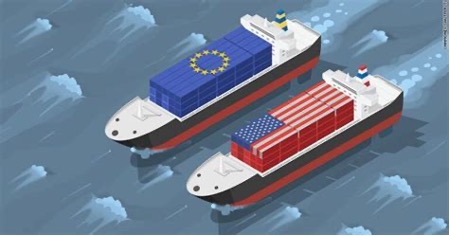
In other words: Washington banks the billions; Brussels sells the spin — and markets rarely buy the spin.
Finally.
Following from last weeks report - whilst it is expected to prove very embarrassing when the EU Empress, Van der Layen, returns to Brussels with this agreement - no one has been more embarrassed by the American President than UK Prime Minister, Kier Starmer.

Trump started by saying “he liked” Starmer, but then went on to tell him that every decision and policy the Labour Government has made was wrong, and that he needs to reverse all of them if Starmer wants to have a chance of winning the next election.

It was great television, and I really would suggest that people watch it, if they want a good laugh.
I realize my report last week was very critical of the British government, and was possibly a little too political for a capital market piece. However, considering what Sterling has done against both the dollar and the Euro, since my report, and the weakness of the FTSE, perhaps my views were of some value after all.
Follow us, and keep yourself up to date with news and views about what's going on in the world's financial markets.
Latest News

The Anatomy of the Perp Basis: How Funding Rates Drive Crypto Liquidity and Cascades

Widening Gaps

Bonds Are Screaming, Stocks Are Smiling – Something Has to Give